
#ENDTHESTREAKTX
February 4, 2020
GOBUS

A shared message from the Texas Department of Transportation
Julian Ekpanya will someday smile while reeling in his first fish. He will experience the joy of hitting his first Little League homerun, learn to ride a bike and eventually take a prideful walk across a graduation stage. But his father won’t be there for any of it.
Julian’s father, Endy, was a Pearland police officer responding to a call on a Sunday morning, when his patrol car was struck head-on by a wrong-way, drunk driver. He died on the way to the hospital. He was 31.
“Julian is five now, and he’s started asking me, ‘When is Daddy coming home? Where is Daddy?’,” said Lucy Lugo Ekpanya, Endy’s widow. “I tell him that Daddy is on a very important mission, he is protecting us, he is our hero and he lives in our hearts. He is in Heaven.”
November 7, 2000 was the last deathless day on roadways in Texas. That means for 19 years straight, at least one person has died every single day. Texas Transportation Commission and TxDOT officials held a press conference in Houston today, launching the annual #EndTheStreakTX campaign that asks all Texans to join the effort to end this deadly 19-year streak.
An average of 10 people die every day in crashes in the state, prompting Texas Transportation Commissioner Laura Ryan to issue a public challenge at today’s press conference. She urged the crowd to tell 10 people about #EndTheStreakTX, and then have each of those 10 tell another 10, causing a wave of commitment and a surge of support for ending the fatal trend.
“I want to challenge everyone here to tell 10 people right now about #EndtheStreakTX,” Ryan said. “Take out your phones and let them know that you need their help to #EndtheStreakTX. Text them this message or share it on social media and tag at least 10 people. Challenge them to share the message with 10 of their friends, and so on. Let’s not have a 20th anniversary next Nov.7th”
TxDOT is asking people to share personal stories of loved ones lost in car crashes on their social media pages using photo and video testimonials with the hashtag, #EndTheStreakTX. The agency also will post statistics for the public to repost on social media outlets to help share this important message.
“We all have the power to end the streak of daily deaths on Texas roadways,” Ryan said. “And while we are committed to invest in the best engineering practices to make our roads safe, we also need drivers and passengers to act more responsibly and help us end the streak of daily deaths on our roads to reach our goal of zero deaths by 2050.”
TxDOT will dedicate an additional $600 million for more safety improvements along Texas roadways over the next two years. The effort includes widening some roads and adding rumble strips that alert drivers if they are veering out of their lane or off the road. We will also add reinforced shoulders and select turn lanes, and deploy new technology that will increase safety on the entire system of roads.
In May, the Texas Transportation Commission approved a goal aiming to end all fatalities on Texas roads by 2050, with an interim goal to reduce them by half by 2035. Texans can play a major role in ending fatal crashes with a few simple driving habits: wear seatbelts, drive the speed limit, put away the phone and other distractions, and never drive under the influence of alcohol or drugs.
“It’s heartbreaking to know that every day for the past 19 years someone has lost a spouse, child, friend or neighbor on our state’s roadways,” said TxDOT Executive Director James Bass. “Ending this daily death streak is a shared responsibility. While we are committed to continue making improvements to our highway system, we all must work toward ending preventable crashes caused by drivers including distracted driving, speeding and drunk driving. Let’s make it a priority to be safe, focused and responsible behind the wheel. Let’s end the streak.”
Since Nov. 7, 2000, fatalities resulting from vehicle crashes on Texas roadways have numbered almost 67,000. The leading causes of fatalities continue to be failure to stay in one lane, alcohol and speed. To decrease the chances of roadway crashes and fatalities, TxDOT reminds drivers to:
- Buckle seatbelts – all passengers need to be buckled
- Pay attention – put phones away and avoid distractions
- Never drink and drive or do drugs and drive –get a sober ride home
- Drive the speed limit – obey speed limits and drive slower when weather conditions wa
You might also like
ETCOG has completed its 2026 Regional Public Transportation Coordination Plan, a five-year roadmap for improving transportation coordination, access, and mobility across the 14-county East Texas region. The EasTexConnects Regional Coordination Committee adopted the plan on October 21, 2026, after a yearlong planning process that included community outreach, stakeholder input, transportation-provider feedback, public review, and committee workshops. Required by federal and state transportation planning guidelines, the Regional Public Transportation Coordination Plan identifies transportation needs and service gaps affecting East Texans, particularly older adults, people with disabilities, low-income residents, veterans, job seekers, youth, and households without reliable access to a vehicle. The plan also outlines strategies to guide regional coordination efforts and support eligibility for certain transportation funding opportunities. “Reliable transportation is essential to accessing healthcare, employment, education, shopping, and other daily needs,” said ETCOG's Transportation Director, Vince Huerta. “This plan gives our region a shared framework for working together to address mobility challenges and build on the transportation services already available in East Texas.” ETCOG serves as the Lead Coordination Agency for TxDOT Planning Region 6, which includes Anderson, Camp, Cherokee, Gregg, Harrison, Henderson, Marion, Panola, Rains, Rusk, Smith, Upshur, Van Zandt, and Wood counties. Community Input Shaped the Plan Public engagement was a central part of the planning process. ETCOG and its project team conducted 15 pop-up outreach events across the region, distributed surveys to nearly 400 community stakeholders, and collected 308 valid community survey responses. The input identified several recurring transportation challenges, including: Limited awareness of available transportation services and how to use them; Difficulty accessing medical appointments, employment, training, shopping, and other essential destinations; Limited service days, hours, and capacity in some rural areas; Challenges traveling between counties or outside the East Texas region; and The need for sustainable funding to maintain and expand transportation services. Among stakeholder survey respondents, 67 percent reported that clients sometimes have difficulty accessing healthcare because of transportation barriers, while 59 percent cited challenges reaching work or school. Four Regional Goals The completed plan establishes four regional goals to guide coordination over the next five years: Improve coordination between transportation providers in the region. Improve access to essential services for transit-dependent populations. Maintain and enhance public transportation services in the region. Improve connectivity with the larger regional transit network. Recommended strategies include coordinated outreach and travel training, stronger partnerships among transit providers and community organizations, efforts to identify sustainable funding, service improvements where feasible, and coordination with neighboring regions to address interregional travel needs. The plan is intended to serve as both a regional blueprint and an implementation tool. It will help guide future collaboration among transportation providers, local governments, healthcare and human-service organizations, workforce partners, and other stakeholders. Projects included in the plan may also be considered for funding opportunities, including Federal Transit Administration Section 5310 funds for enhanced mobility for seniors and individuals with disabilities. The complete 2026 Regional Public Transportation Coordination Plan is available in two volumes: Volume 1: Final Plan Volume 2: Appendices
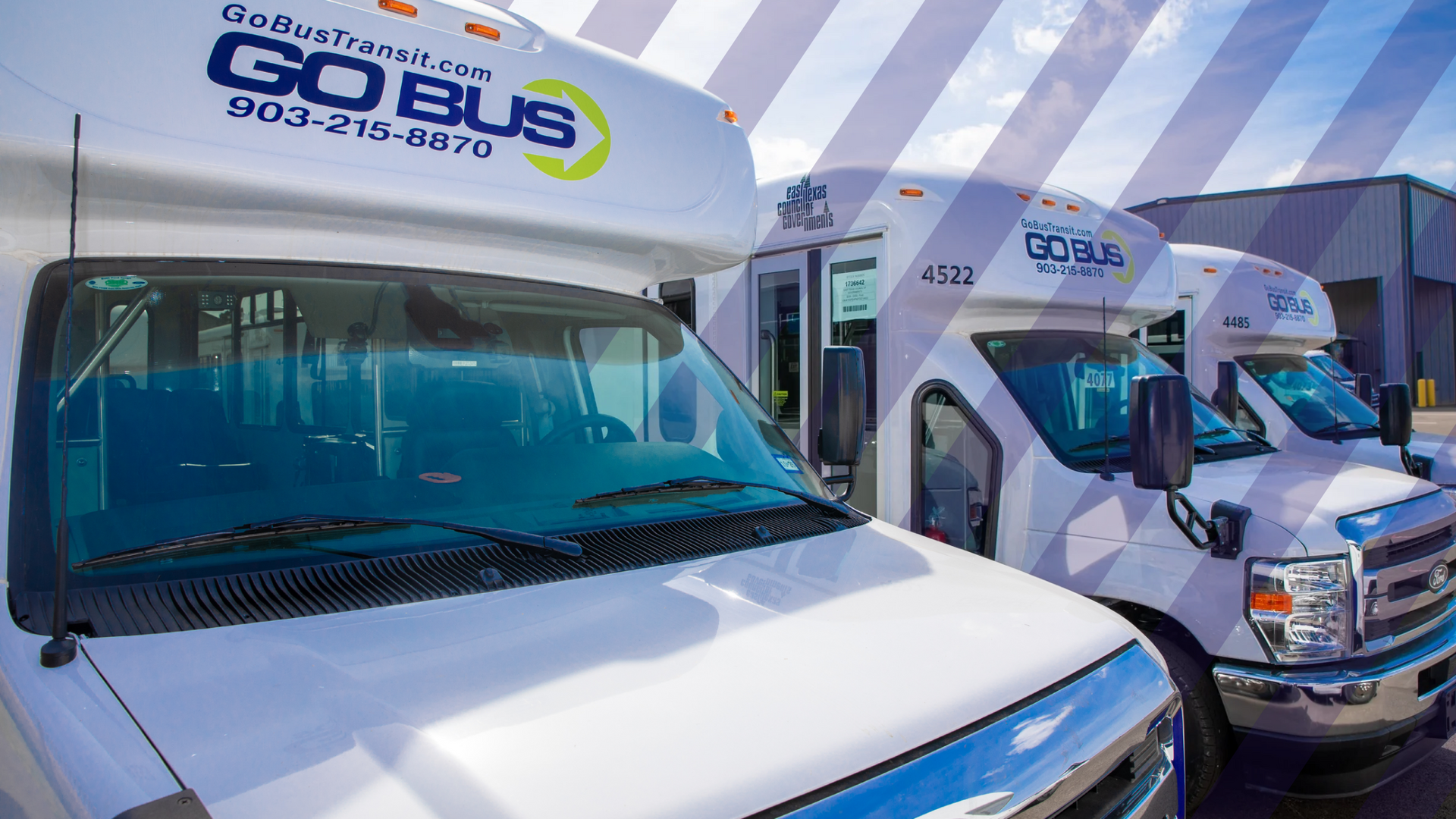
ETCOG is pleased to provide a GoBus Community Partner Media Kit for our member communities to use in local communications. The kit is designed to make it easy for cities, counties, libraries, schools, health care providers, community organizations, and other local partners to share clear, consistent GoBus information with residents. Partners may download the materials and incorporate them into their own websites, newsletters, social media channels, community calendars, public-information displays, and resident outreach. The media kit includes: GoBus overview and core messaging Contact, reservation, and website information Ready-to-use social media posts Website-ready copy County-specific service schedule information Information about who can ride, accessibility, fares, trip purposes, and how to reserve service Key service details for demand-response transportation, regional connections, veterans' transportation, ADA accessibility, and select local service options By sharing these resources, member communities can help ensure residents know that GoBus is available to the public and can provide transportation to medical appointments, employment, education and training, grocery stores, pharmacies, government offices, and other important destinations. Because service days, regional connections, and trip availability vary by county, communities are encouraged to share the county-specific schedule information included in the kit and direct residents to GoBus for reservations and current service details. Download the GoBus Community Partner Media Kit and help connect residents to transportation, opportunity, and essential services throughout East Texas. For questions about GoBus service or to schedule a ride, residents may visit GoBusTransit.com or call 903-215-8870.
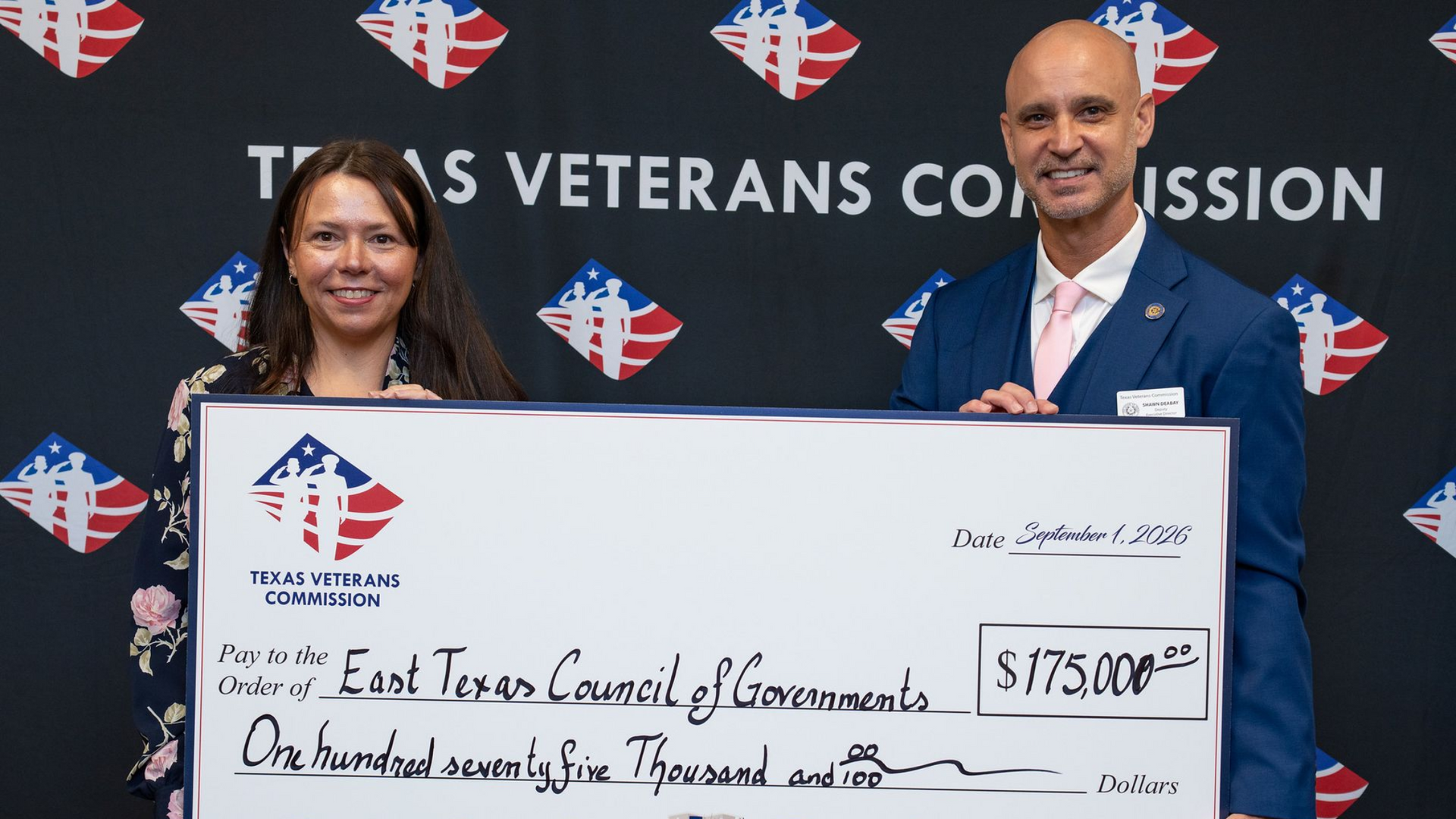
The East Texas Council of Governments (ETCOG) has received a $175,000 grant from the Texas Veterans Commission to continue transportation services for veterans through its rural transit district, GoBus. The funding is part of more than $3.3 million in Texas Veterans Commission grants awarded this month to 13 veteran-service organizations across East Texas. Statewide, the commission awarded $40.8 million to organizations helping veterans and their families access critical services. For many veterans in rural East Texas, reliable transportation can be a barrier to medical appointments, employment, education, grocery stores, social service programs, and other essential destinations. The grant will help GoBus continue providing transportation options that support veterans’ independence and connection to the services they need. “We are grateful to the Texas Veterans Commission for investing in transportation access for veterans in our region,” said ETCOG’s Transportation Director, Vince Huerta. “Through GoBus, we can help reduce the transportation barriers that too often stand between veterans and essential health care, employment opportunities and community resources. With this grant, we are proud to offer free trips for veterans and active service members, their spouses and dependents.” GoBus provides public transportation across East Texas, helping residents in rural communities travel safely and affordably where transportation options may otherwise be limited. Every single vehicle in our fleet is ADA compliant and ready to serve passengers with mobility challenges, disabilities, or special needs. The Texas Veterans Commission’s Fund for Veterans’ Assistance supports organizations that provide direct assistance to veterans, their families and surviving spouses. Grant funding helps address service gaps in areas such as transportation, housing, financial assistance, legal services, and other supportive programs. Veterans who need transportation assistance are encouraged to contact GoBus to learn about available services, eligibility requirements, and how to schedule a trip. For more information about GoBus, visit www.gobustransit.com or call 903-215-8870.